The Journal · October 25, 2026
How to Care for a Linen Book Cover
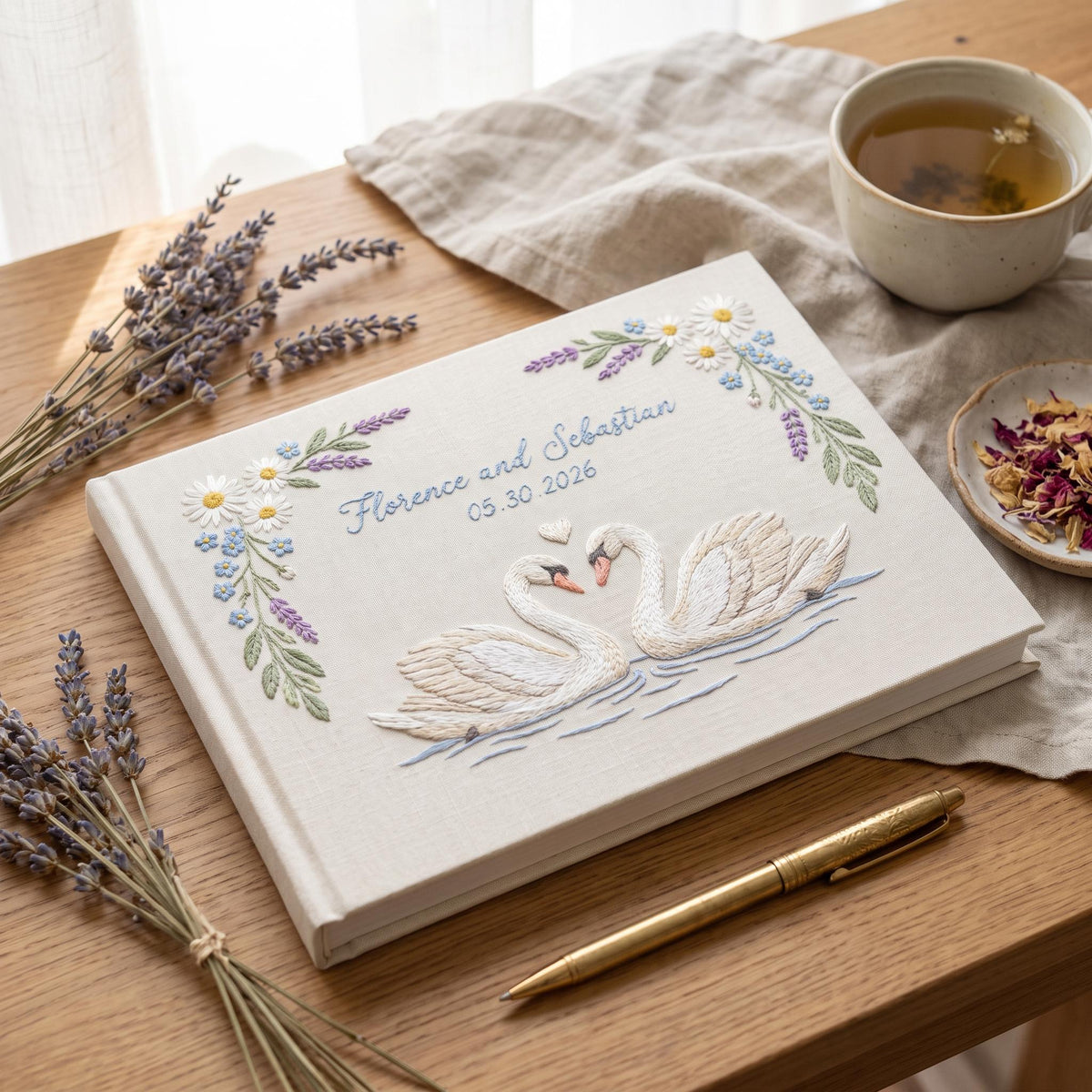
To clean a linen book cover, start dry: brush away dust with a soft brush, lift light marks with a dry cleaning sponge, and only then spot-clean with a cloth that is barely damp. Never soak the cover, never rub the embroidery, and let the book dry flat and closed, away from heat. With that simple routine, and good storage, a linen keepsake stays beautiful for decades.
Linen is one of the oldest bookbinding fabrics for a reason. It is strong, it softens gracefully with handling, and it carries embroidery well. It also asks for a gentle hand. This guide walks through everyday care, stain removal, and storage, so your guest book, album or recipe book can be handed down in the condition it deserves.
Why linen book covers need a gentle touch
A linen book cover is a layer of woven fabric wrapped around rigid board and held in place with adhesive. That construction is what makes it sturdy on a guest book table, and it is also why water is the main thing to be careful with. Too much moisture can soak through the weave, loosen the adhesive underneath, warp the board, or leave a tide line where the damp area dries.
Embroidery adds a second consideration. On a PARACELART book, your names, date and motif are stitched by hand into the linen rather than printed on top of it. Stitches are raised, textured and made of many fine strands of thread. Scrubbing or rough handling can fray those strands or pull a loop out of place. The good news is that embroidery hides everyday wear far better than print does, and it does not rub off with handling. It simply wants to be cleaned around, not through.
Keep three principles in mind for everything that follows:
- Dry before damp. Most dust and surface marks come off without any moisture at all.
- Blot, never rub. Pressing lifts dirt out of the weave. Rubbing pushes it deeper and roughs up the fibers.
- Less is more. Start with the gentlest method, test it on a hidden spot, and stop as soon as the mark is gone.
Everyday care: dusting and light cleaning
For a book that lives on a shelf or a coffee table, a little attention every few months is enough.
Dust with a soft brush
A clean, soft brush is the most useful tool you can own for a linen cover. A wide makeup brush, a soft paintbrush, or a baby hairbrush all work. Brush in the direction of the weave, from the spine outward, and use light flicking strokes over the embroidery so the bristles lift dust from between the stitches without catching them.
Lift light marks with a dry cleaning sponge
For fingerprints, light smudges and the grey haze that builds up on pale linen, a dry cleaning sponge (sometimes sold as a soot sponge) is a quiet hero. It is used completely dry and picks up surface grime by gentle pressure. Press and lift across the plain linen areas, turning the sponge to a clean face as it darkens. A soft white vinyl eraser can also help on small marks, but use it only on the plain fabric, with very light pressure, and keep it away from the stitching.
Handle with clean, dry hands
Natural skin oils are the most common cause of darkened edges on a light linen cover. Washing and drying your hands before you open a keepsake, especially before a guest book is passed around, prevents most marks before they start.
How to spot-clean a stain on a linen book cover
Spills and smudges happen, often at the very events these books are made for. Act quickly, stay calm, and follow the gentlest method that works.
| What happened | What to do | What to avoid |
|---|---|---|
| Water or a clear drink | Blot immediately with a clean white cloth or paper towel, then let the book dry flat and closed under light, even weight. | Hair dryers, radiators or direct sun, which can warp the board. |
| General grime or a smudge | Dry sponge first; if needed, a barely damp white cloth with plain or distilled water, blotting from the outside in. | Wetting the whole panel or scrubbing over stitches. |
| Oil, butter or lotion | Blot, then sprinkle a little cornstarch on the spot, leave it for a few hours to absorb the oil, and brush it away. | Water first, which can spread an oily mark. |
| Wine, coffee or ink | Blot gently without spreading. If a faint mark remains, a drop of mild, clear soap in water on a barely damp cloth may soften it. | Bleach, stain removers and solvents, which can lift the linen color and weaken thread. |
The barely damp method, step by step
- Brush the area first so you are not turning dust into mud.
- Test on a hidden spot, such as the lower edge of the back cover, and wait for it to dry before continuing.
- Dampen a corner of a white, lint-free cloth with distilled water and wring it until it feels almost dry.
- Blot the mark, working from its outer edge toward the center so it does not spread.
- Blot again with a dry part of the cloth to draw moisture back out.
- Let the book dry closed and flat, with a clean sheet of paper inside the cover to absorb any dampness.
If a stain sits on the embroidery itself, treat it even more lightly. Press a barely damp cotton swab onto the thread, lift, and repeat, rather than wiping across the stitches. For a serious or old stain on a book that matters deeply to you, it is worth asking a professional book or textile conservator before trying anything stronger. A faint mark is always better than a damaged cover.
What never to do with a linen book
- Do not put it in the washing machine or submerge it. The cover is fabric over board and glue, and immersion will ruin all three.
- Do not iron the cover. Heat can scorch linen, flatten the raised texture of the embroidery, and soften the adhesive underneath.
- Do not use bleach, household sprays or wipes. Many contain chemicals that lighten color or leave a residue in the weave.
- Do not use a sticky lint roller over the stitches. It can lift loose fibers and snag thread. Keep it to plain linen, if you use one at all.
- Do not dry it with heat. Patience and air drying protect the board from warping.
Storing your linen keepsake for the long term
Good storage does more for a linen book than any cleaning method, because it prevents the fading, dust and damp that cause most problems in the first place.
Keep it out of direct sunlight
Like any natural fabric, linen can fade with long exposure to strong light, and the spine usually shows it first. Choose a shelf or table away from a sunny window, or rotate a book on display every so often. This matters most for deep linen colors such as navy, forest green or burgundy, and for the thread colors in your embroidery.
Mind humidity and temperature
Books are happiest where people are comfortable: a steady room temperature, not too dry and not too damp. Avoid attics, basements, garages, and the space directly above a radiator or vent. High humidity can encourage mildew and make the board swell, while very dry heat can make paper brittle over time.
Use a sleeve or box between uses
Every PARACELART book arrives in a protective plastic sleeve inside a kraft gift box. Keeping them is a simple way to shield the cover from dust between anniversaries. For longer storage, a breathable cotton bag or an archival box is a good alternative, especially in a humid climate. Store the book flat or upright, supported on both sides, rather than leaning at an angle, which can strain the spine.
Care for what is inside, too
Let ink dry fully before closing the pages, and let instant photos finish developing before adding them. Use photo corners or a photo-safe adhesive rather than ordinary tape, which yellows and loses its grip with age. If guests tucked in loose cards or notes, a slim envelope glued inside the back cover keeps them together without stretching the binding.
A linen book that holds your guests' handwriting, your baby's first year or your family's recipes is meant to be opened again and again. A soft brush, a dry sponge and a sensible shelf are all it takes to keep it ready for that. If you are choosing a keepsake to treasure, explore our hand-embroidered wedding guest books, our linen photo albums, or a family recipe book made to be passed down. A design like the Swan Lake Wedding Guest Book shows how embroidered names, dates and motifs sit within the linen itself. Each one is stitched to order in 5 to 7 business days in our Katy, TX studio and ships with tracking within the US.
Frequently asked questions
Can I wash a linen book cover?
No. A hardcover linen book should never be machine washed or soaked, because the fabric is bonded to board with adhesive. Clean it with a soft brush, a dry cleaning sponge, and, only when needed, a barely damp cloth used to blot small areas.
How do I get a water spot off a linen cover?
Blot it right away with a clean white cloth, then let the book dry closed and flat, away from heat. If a faint ring remains once it is fully dry, a very light blot with a barely damp cloth along the edge of the ring can sometimes soften it. If not, a faint mark is safer to live with than repeated wetting.
Will the embroidery fade or wear off?
Embroidery is stitched into the linen, so it does not rub off with handling the way printing can. Thread, like the linen itself, can fade with years of strong sunlight, so storing the book out of direct sun is the best way to keep the colors true.
Is it safe to keep my guest book in plastic?
The protective sleeve your book arrives in is ideal for keeping off dust between uses. For storage over many years, especially somewhere humid, a breathable cotton bag or an archival box allows air to circulate and helps prevent trapped moisture.
How often should I clean my linen book?
A light brushing every few months is plenty for a book on display. Spot-clean only when there is a mark to remove, since the less a linen cover is handled with moisture, the better it ages.